Sunday, April 18, 2021
The 100th Anniversary of the Cherry Blossom Festilval, Washington D.C. , USA
Sunday, April 11, 2021
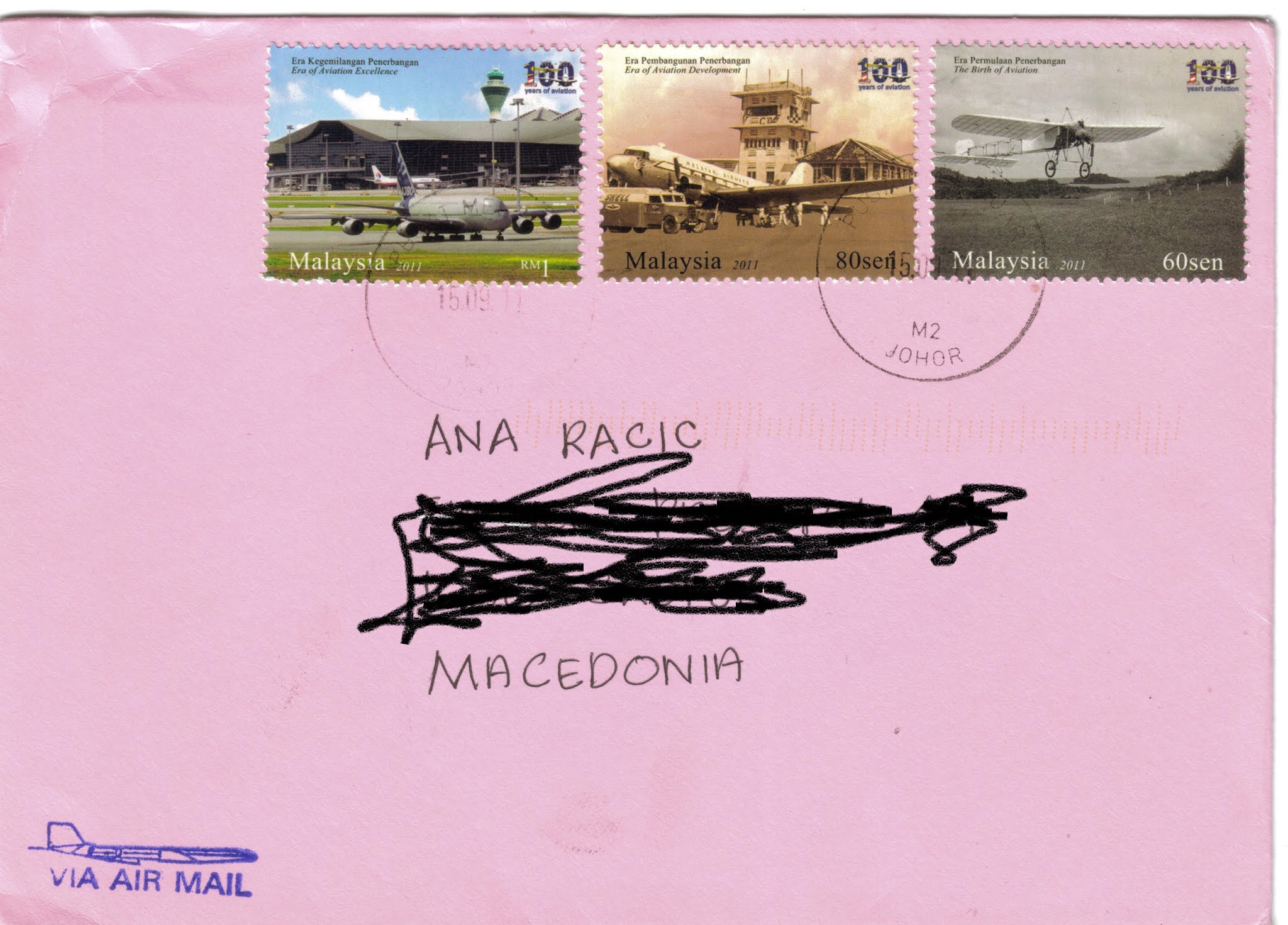
The 100th anniversary of aviation, Malaysia
Sunday, April 4, 2021
Flowers, Bosnia and Herzegovina
The 2012 issue (7th of June) is dedicated to the so-called spring flowers, the same flower represented in both the top and the bottom stamp in its column.
First is the Viola odorata, that is more commonly known as wood violet or sweet violet or garden violet (a small stamp-salute to our dear host of Sunday stamps 😉). When I was a child we had plenty of pots in the garden with violets. I loved them! The colours were just so distinct, yet the petals felt so fragile.
Next to it are two examples of Primula veris, better known as cowslip, followed by the Helleborus niger, that bears the names of winter rose or Christmas rose (even though it does not belong to the rose family). In Macedonian, we call this plant "kukurek" and it is often used in the context when someone is ill... usually we say that when you wake up in the morning, you will feel as 'kukurek' (meaning you will get better and healthy). I never really thought about the etymology of the saying, until just now... There are some references to some old myths, but still not quite sure which one is to blame :)
The fourth column of stamps features the lovely Galanthus, or better known as snowdrop. We've been having these in our garden ever since I could remember, and they've always brought joy since they would be the first thing blooming during winter days, and were always like the herald of better days coming :) I just have the impression that each year they blossom earlier and earlier... or it might be just my impression...
The last in this set is the Crocus sativus, or much better known as saffron. I haven't used it in the cuisine yet, though I come across it in some recipes. Recently I spotted it in the supermarket and wanted to buy it and give it a try... but boy is this fella expensive 😀 And now I read it is considered to be the most valuable spice by weight...so it shall wait for some better days... till then my food can certainly survive without it 😊
The 2013, issued on 25th September, set features the so-called nectariferous plants (producing nectar). Again there are two stamps dedicated to each of the flowers, though the order is a bit mixed up here :)
First is the "black locust" (also known as 'false acacia). second is the sage, whose tea I sometimes drink when I have dental issues - it has proven really effective. In the middle, that little yellow flower with the bee is the dandelion, of which we have plenty in the front part of our garden, and with the daffodils in the mix, it is really a beautiful sight!
The fourth stamp features the 'common heather', while the last one is dedicated to the linden, which is also kind of a symbol of my city, famous for the smell of linden overwhelming the streets in spring (not so fun for the ones with allergies tho').
So, if you haven't gotten tired of flowers and springy themes, head over to Sunday stamps for some more beauties :)
...
Sunday, March 28, 2021
Children's Books, Serbia
The first of this kind that comes to mind is "The Little Prince". I'm pretty sure that if at least not everyone has read it, that everyone has heard about it. A book that was on the mandatory reading list in the fourth grade, that equals to being 10 years old. A book I really hated back then cos I couldnt understand it, it was so odd and incomprehensible to my 10 year-old-brain. A book I read again around 10 years later and fell in love with it. To this day I still dont know why,, even though it is considered as a children's book, it is put on the reading list at such young age - I just really dont think that brain can get fully immersed in its beauty.
Another delight of a book (that I read in my adult years) is The Secret Garden by Francis Hodgson Burnett - if you haven't read it, I really really recommend it - sometimes it takes me by surprise how much of what is considered to be children's literature, is so suitable for adults as well.
And while I'm at it - Neil Gaiman's Coraline is another lovely example to add here :)
In 2010, the theme for the EUROPA's stamps was Children's Books, and Serbia issued these lovely stamps and FDC. A number of titles are hidden in the drawings - can you name them?
And if there is a children's book you'd recommend, please do so - I'd love to read it!
Before I take you to the other children-related posts for today, here is what Serbian post had to say on the subject of Children's Literature:
-Children's Literature singles out as a special literary layer from the aspect of its function and the reader's age. Its main characteristics is belonging to an age where personality is being shaped. The spirit of this particular form of literature is impregnated by signs that are characteristic for childhood: freedom, illusory understanding of live and environment, joy, game, basicness, simplicity, liveliness, etc. Its world is ennobled by joyous charms and composed of fine threads of children's spirit. The main trait of this literary branch is actually one of the decisive roles in child's life. We are here talking about the implementation of beauty, goodness and strength into their spirit: about the art of awakening the curiosity of young minds, learning how to embrace the world with love, and to release the accumulated emotions. The little reader is a young creature who comprehends the world in a different manner and by laws of a different logic. It contemplates and experiences the world though his dreamer's eyes.
The aroused imagination leads the child towards unreachable heights and develops its sensibility. As a driving force of children's discovering of the world, the imagination represents the most powerful means for introducing them into life.
The fame of dream and reality, impossible and supernatural is receptive to the heart of the little reader. The wild and bold imagination broadens its perspectives, frees its thoughts, forms its emotions, enables the comprehension of reality, conjures up to the unknown and invisible, and makes possible the identification with literary heroes.
The imagination creates a new world over which reign other laws of man and nature.
Check out the other posts here
Thursday, March 25, 2021
The 50th Anniversary of the Apollo 11 Mission to the Moon, Brazil
Sunday, March 21, 2021
Starfish, Cyprus
A nice set of Cyprus stamps from 2007 showing 4 different starfish, and all of them can be found in the Mediterranean Sea.
The two stamps in the top row show the - 1. Antedon mediterranea or more commonly known as the Mediterranean feather star. 2. Centrostephanus longispinus, or more commonly known as the hatpin urchin.
The bottom row show the 1. Astropecten jonstoni, that doesnt seem to have a more common name in use, and 2. Ophioderma longicauda or more commonly known as Smooth Brittle Star.
I dont recall having seen a starfish in real life. Maybe when I was little during our holidays at the Adriatic Sea, but I have no such memory. How about you? Ever encountered one? And what was it like?
Hope you are all safe and healthy folks, it is a crazy world out there as we all know it.
And before you go, check out the other entries for today's Deep Blue Sea challenge :)